We may earn a commission from links marked as affiliate links. As an Amazon Associate I earn from qualifying purchases. Read our disclosure.
Watch where things naturally land
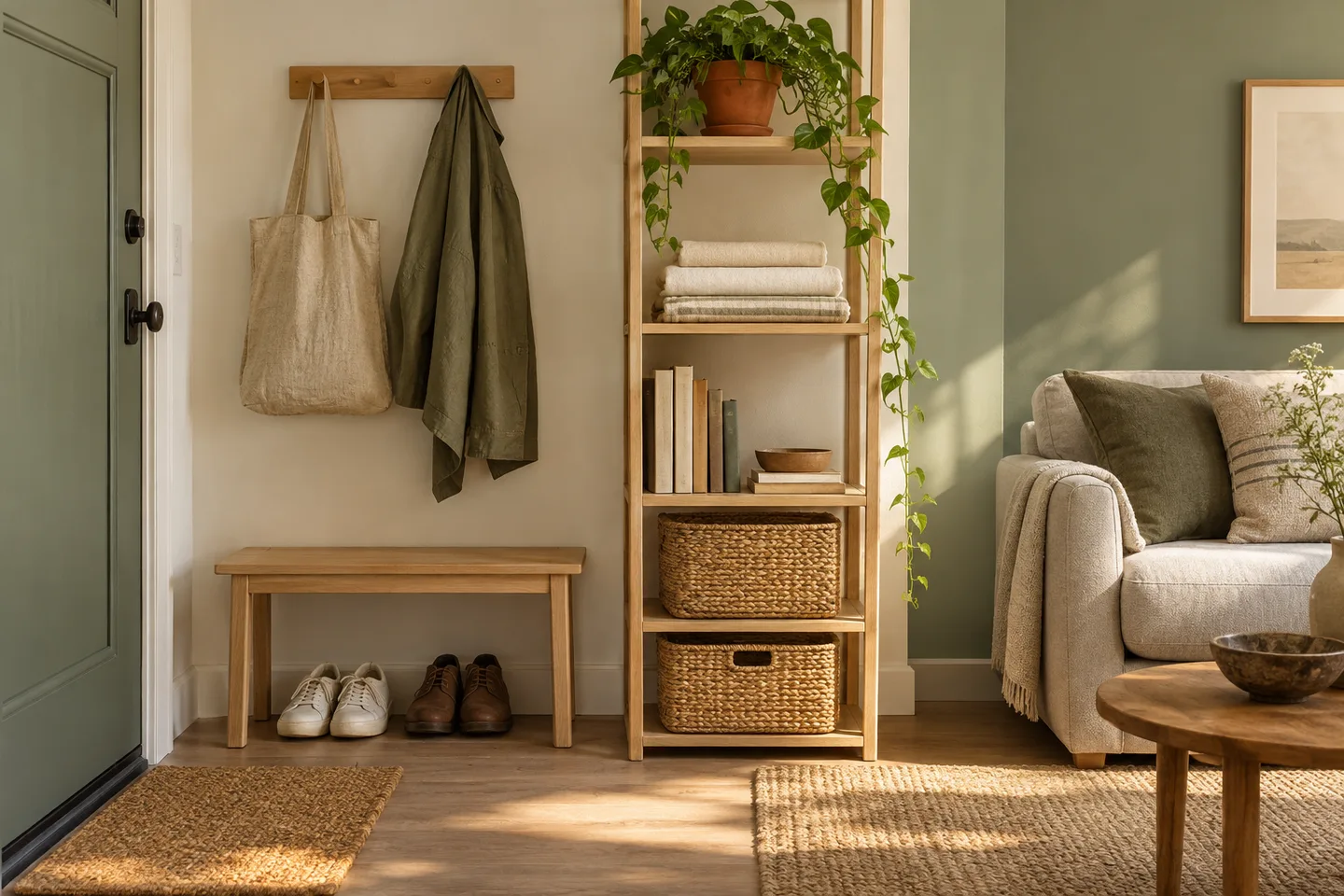
A pile near the door is useful information. It tells you where keys, bags, shoes, or mail need a home. Before ordering containers, notice where clutter returns and which items are part of the same routine.
Choose one small area to improve. An entry shelf may need room for a bag more than another decorative basket. A bathroom cabinet may need fewer products rather than taller dividers. Start by deciding what belongs there.
Measure the opening, not only the shelf
Cabinet doors, hinges, plumbing, and baseboards can reduce usable space. Measure the narrowest opening, then check the dimensions of the organizer when it is full. A drawer insert is not useful if the drawer will not close over the items inside it.
Think about how you will retrieve the contents. Bins on a high shelf need a safe way to reach them. Heavy items should not turn an overhead shelf into a lifting challenge. Follow the furniture maker’s installation and anchoring instructions.
Match visibility to frequency
Open storage is helpful for things used throughout the day. Closed storage can make occasional supplies less visually distracting. Neither is universally better: the right choice depends on what you store and how readily you want to find it.
- Keep everyday items accessible without moving several other objects.
- Group supplies by the task they support rather than color alone.
- Leave enough room to return an item without precise rearranging.
- Label shared storage with simple words that everyone in the home understands.
Give the system a trial run
Try the arrangement with containers you already have. Live with it long enough to see whether the items return to their places. If a solution needs constant attention, simplify it before buying a matching set.
A successful storage purchase supports a routine you can maintain. It does not have to hide everything or fill every available inch. A little empty space makes a small home more adaptable.
Try one landing zone
For one week, use a container you already own for the objects you carry through the door. Note what lands beside it instead of inside it. A bag may need a reachable hook or shelf rather than a smaller bin. Keep the exit route clear and check any hardware instructions before mounting.
Our entryway guide for apartments without a closet develops this small-zone approach. If a movable shelf seems useful, compare the measured footprints in our RÅSKOG and NISSAFORS cart comparison.