We may earn a commission from links marked as affiliate links. As an Amazon Associate I earn from qualifying purchases. Read our disclosure.
Measure the route into the room
Check the entrance, hallway turns, stairs, and elevator rules before choosing furniture. The packaged dimensions may differ from the assembled dimensions. Ask the retailer how the item arrives and whether parts can be removed for delivery.
A drawing helps you keep these constraints together. Record the narrowest openings and any obstacles, and verify the delivery requirements with the seller or building manager. Do not rely on a photo to judge scale.
Map the everyday footprint
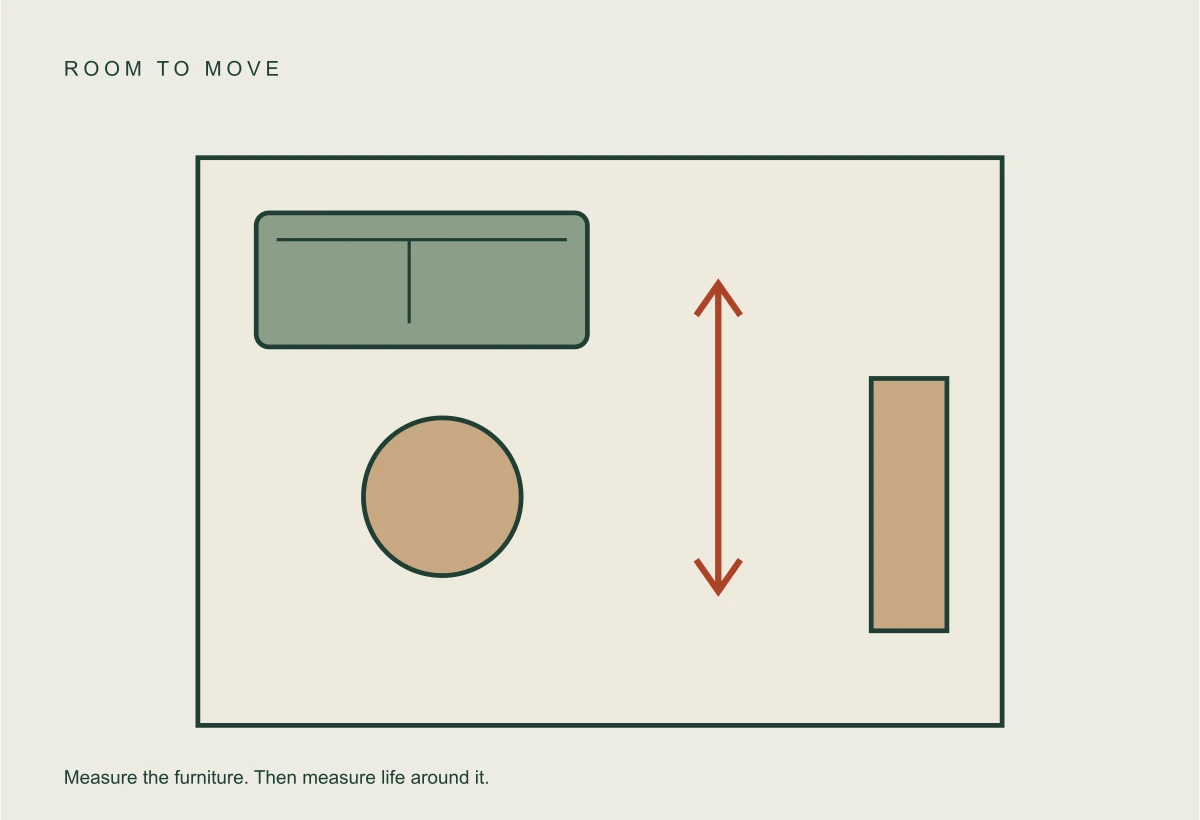
Mark the furniture’s dimensions on the floor with removable tape or paper. Walk through the room as you normally would. Open nearby doors and drawers, pull out a chair, and check access to outlets and heating equipment.
For folding or extendable furniture, measure every intended configuration. A table that stores compactly may still be awkward when you need to seat people. Keep required safety clearances and exit routes unobstructed.
Check the hidden space requirements
Storage furniture needs room to open. Reclining furniture needs movement space. A low shelf can become a difficult cleaning corner. Think about those interactions before evaluating the piece only by its outside dimensions.
- Compare assembled and packaged measurements.
- Read anchoring and installation instructions.
- Check the return process for large or assembled items.
- Plan how you will access anything stored inside or beneath it.
Leave some room unassigned
A smaller home benefits from flexibility. If every floor area has a permanent job, it becomes harder to host a visitor, exercise, or move furniture for cleaning. Consider whether an occasional-use item can fold, nest, or serve an existing task.
Multifunctional furniture is useful only when its functions are convenient for you. An uncomplicated piece that fits well can be a better daily companion than an elaborate solution that needs constant rearranging.
A measurement worksheet to take shopping
- Delivery route: record each doorway’s usable width and height, hallway turns, stairs, elevator and building delivery restrictions.
- Packaged item: ask for package dimensions, package count and whether delivery includes assembly.
- Assembled item: record width, depth and height and mark the footprint with removable tape.
- Operating space: mark drawers, doors, chair pull-out and every extended or folding position.
- Surroundings: record nearby outlets, heaters and required safety clearances from the relevant instructions.
- Daily use: walk through the arrangement and check access for cleaning before ordering.
Download the printable furniture measurement worksheet. Do not infer delivery fit from a single doorway measurement; confirm difficult turns and handling with the seller.
See how orientation matters in our comparison of two IKEA storage-cart footprints.